

Never forget a name again.
tagAR™
Have you ever been in the awkward situation at a social event where someone approaches you and despite your best efforts you cannot remember their name? This exact situation is what inspired the development of the mobile application, tagAR. This is a social application that provides a visual name tag into your augmented view, replacing the traditional “Hello, my name is” sticker version. It allows you to see the names of people around you tagged above their head at all times. This can help you find people in a crowded room (through the search feature) and remember someone's name before and as you approach them in educational environments, conferences, meetings, social events and where people are connecting for the first time.
The core concept behind tagAR was created to help those with dyslexia, like myself. The application provides a visual to a typically otherwise auditory introduction. Though this lead to the creation of the application, the intended audience is much wider, making it easy for those with a learning disability to receive assistance discreetly.


watch the app demo.
The Process
Accessibility is the brief, not just a feature
The app exists for dyslexic users, so legibility governed decisions that would normally be aesthetic. I picked the typeface on reading performance for dyslexic readers rather than on how the brand wanted to look, and chose San Francisco, Apple’s system typeface. Its counters and apertures are wide enough that the strokes do not close up and blur together at a glance, and its letterforms are distinct enough in shape and proportion to resist the mirroring and letter-swapping that trip dyslexic readers.
It just makes sense
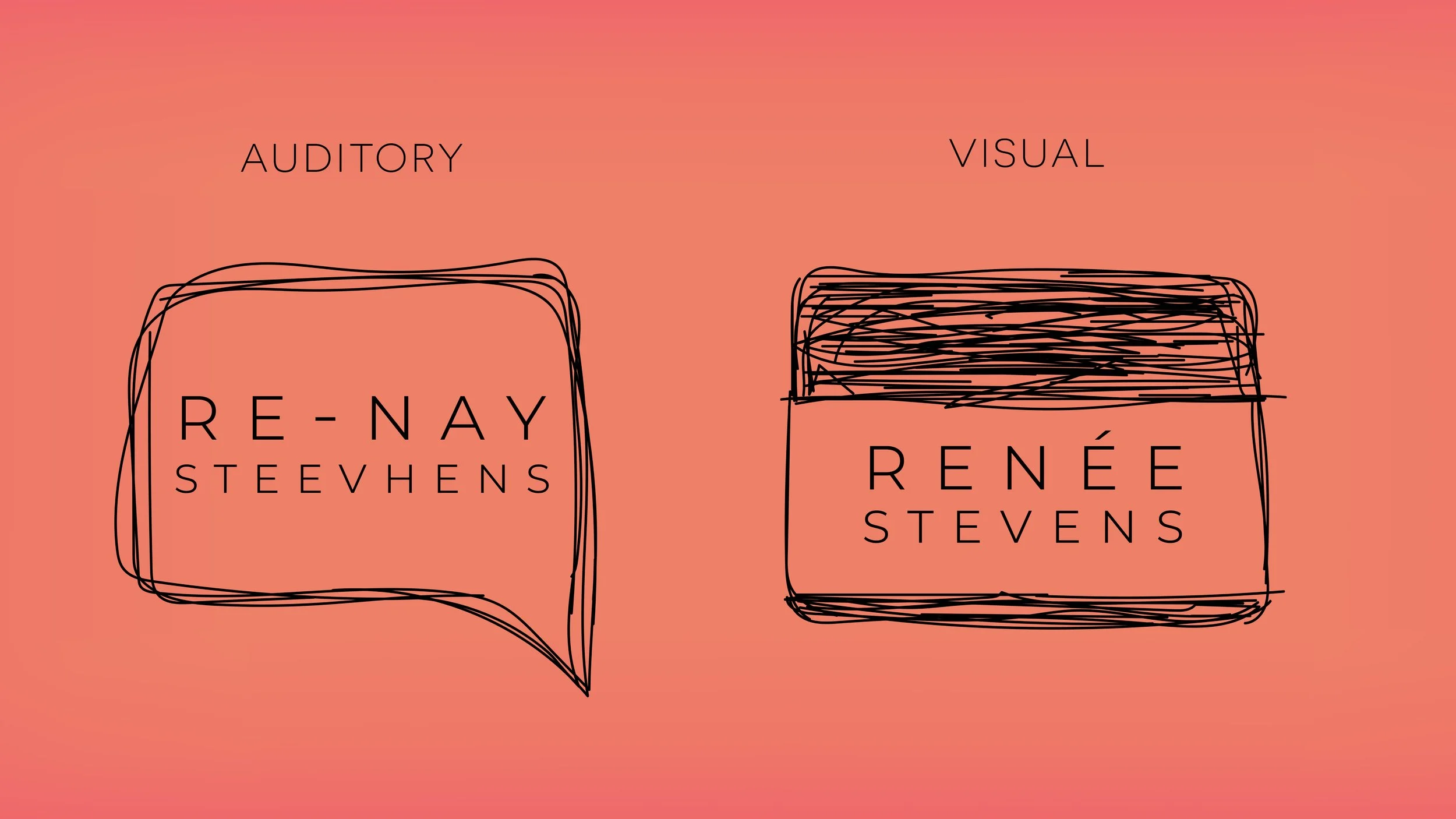
Research into dyslexia points consistently to multi-sensory reinforcement: a name that is seen and heard is retained far better than a name delivered through either channel alone. The original failure — an introduction being purely auditory — suggested the fix was purely visual. It wasn’t.
So I built both. I added audio in the 2.0 release: every user records the correct pronunciation of their own name, and tapping any nametag plays it back in that person’s voice.
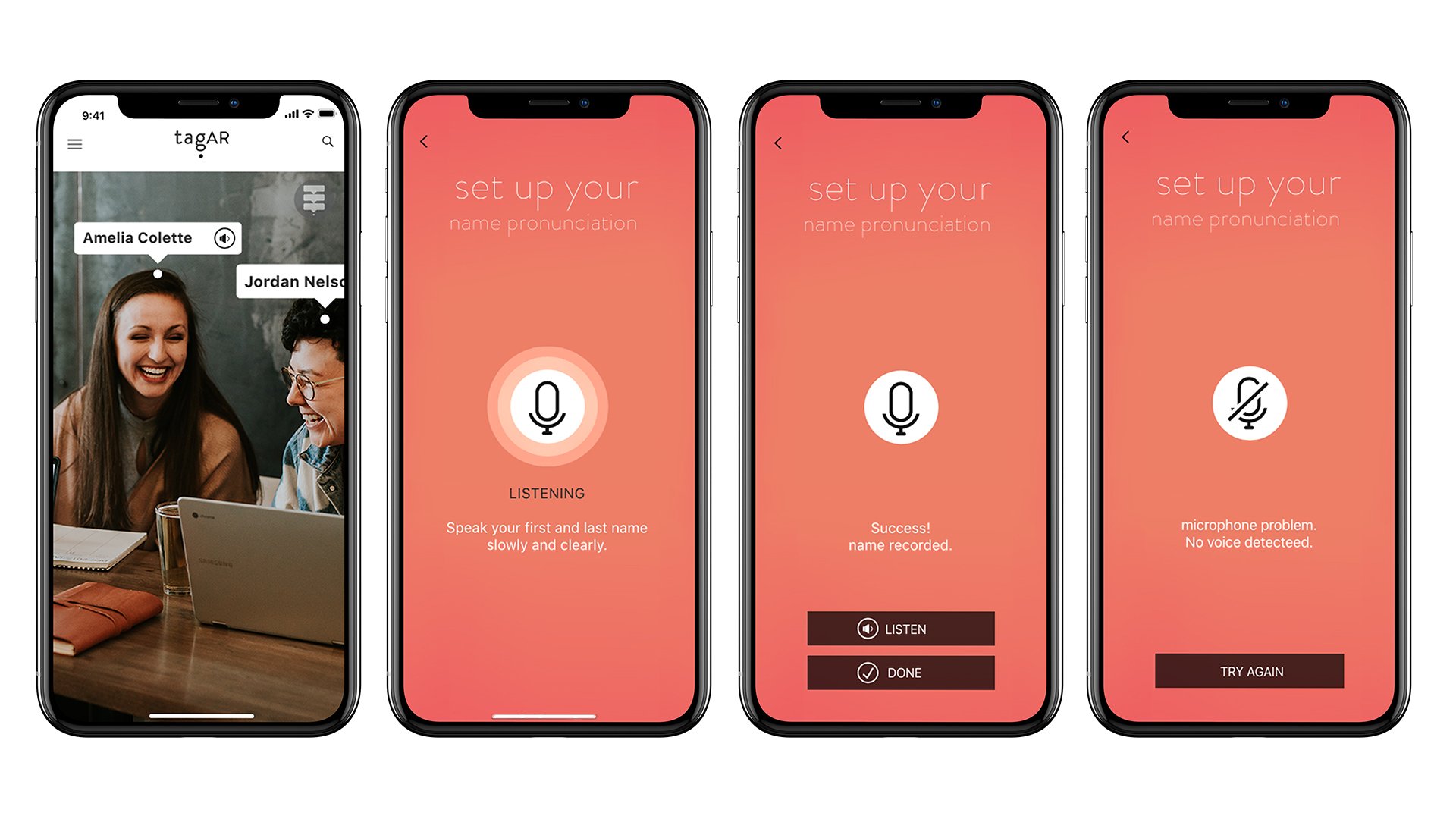
Recording name pronunciation audio flow UI and animation designs
Privacy
The other challenges were security, user buy-in, and battery life. Choosing to use facial recognition brought an ethical weight the rest of the app did not carry. A nametag floating above a stranger could be read as surveillance, so the experience had to give every user control over when and how their own tag was used. tagAR™ only works between people in the room who are running it at the same time.
Those gatekeeping decisions protect a bystander, and they narrow the situations where the app can help. I made that trade deliberately: a nametag app that worked on strangers would have been more immediately useful, and a fundamentally different product — one I could not get behind. Limiting the search to people nearby who are actively running the app answered security, trust and battery at once, because all three come down to how wide the app has to look.
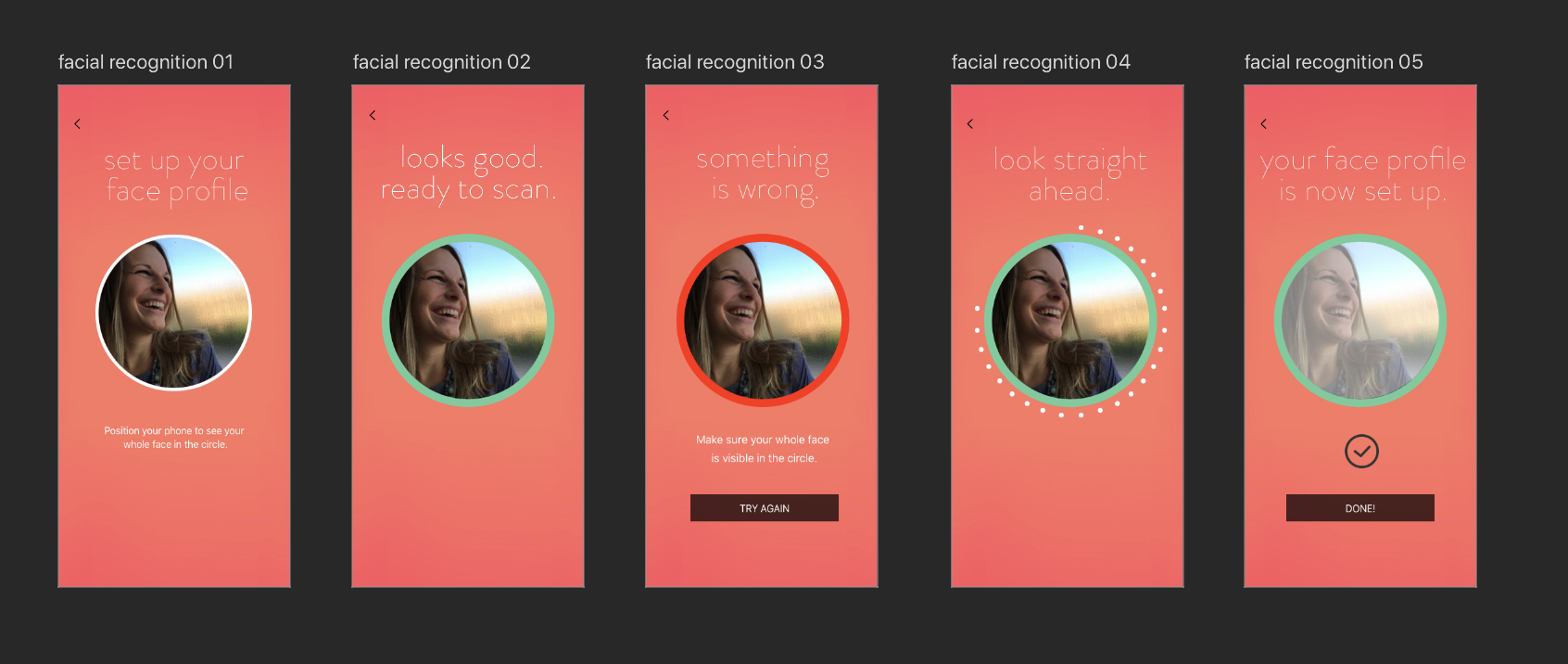
Facial recognition scan flow
Design
The why behind this project drove every design decision. It was always planned as an augmented reality application, but the concept came before the technology did. So I designed the UI as I thought it would work best, then adapted it as the technology caught up.

Wireframes of inital concept design

final working design showing launch screen, facial recognition instructions, settings page, and AR nametag experience.
Development
I designed and built tagAR™ end to end — concept, AR experience, UI, and the iOS development. I started coding the night Apple released ARKit, so there was no established practice to borrow from. Initially, when I reached out to developers for this project, they all said they didn’t know how to do what I was asking. So, I did it myself. I was able to eventually grow the development team to help make sure all the information in the databases was secure and to keep the app up to date.

Coding on a train– any and every free minute
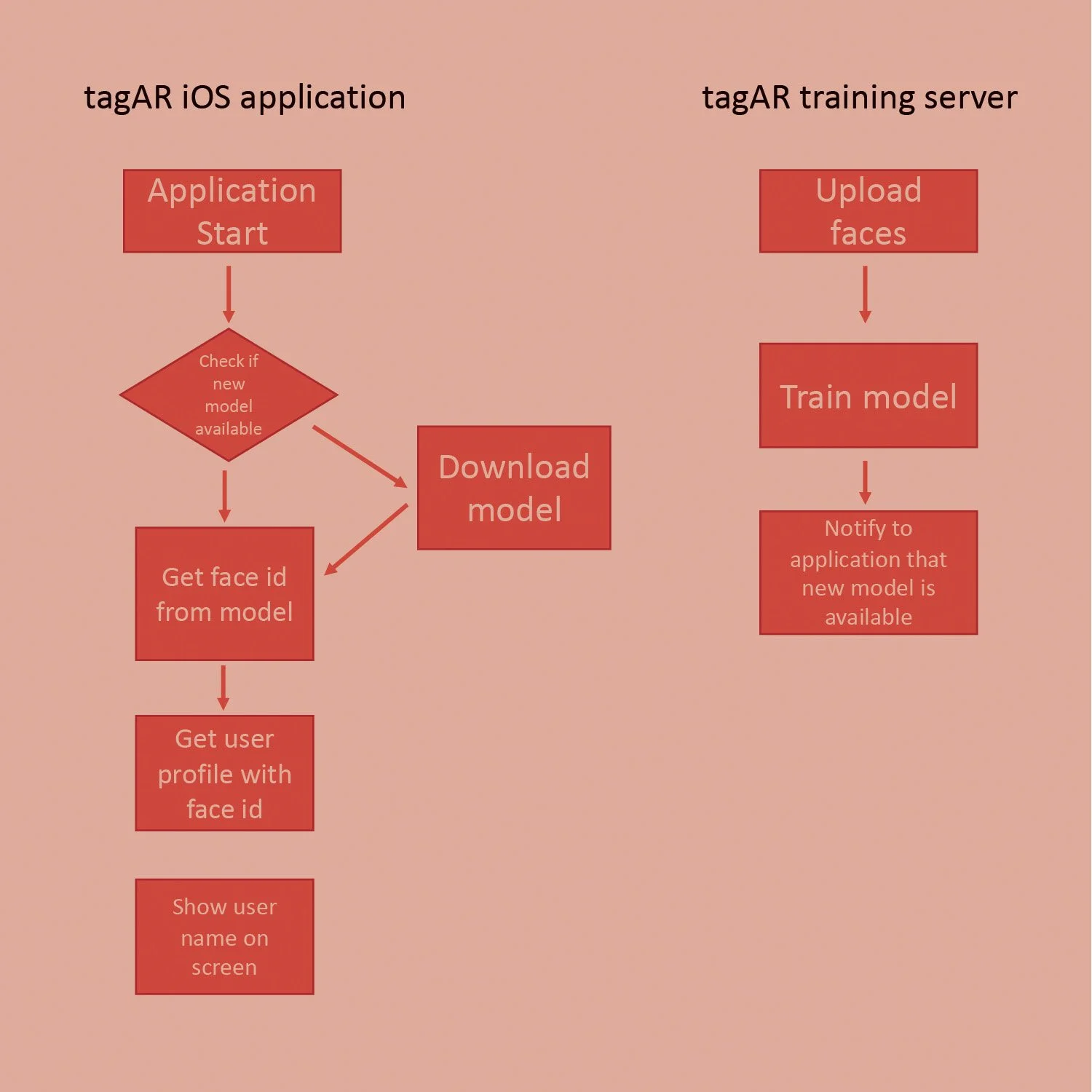
backend flow
The Result
tagAR™ has been live on the App Store since 2017 and has been evolving ever since. Alongside the product, it became a body of research. It was presented at the European Conference for Social Media in Limerick, at SXSW, published in the Frameless Journal, and became the subject of a TEDx talk at Syracuse University. It won a GDUSA American Web Design Award in 2019.
The same principle carried into Augmented Learning, which applies live captioning in AR — developed for iPhone, tested on Vuzix Blade glasses — so that nobody nearby knows a translation or a caption is being received.
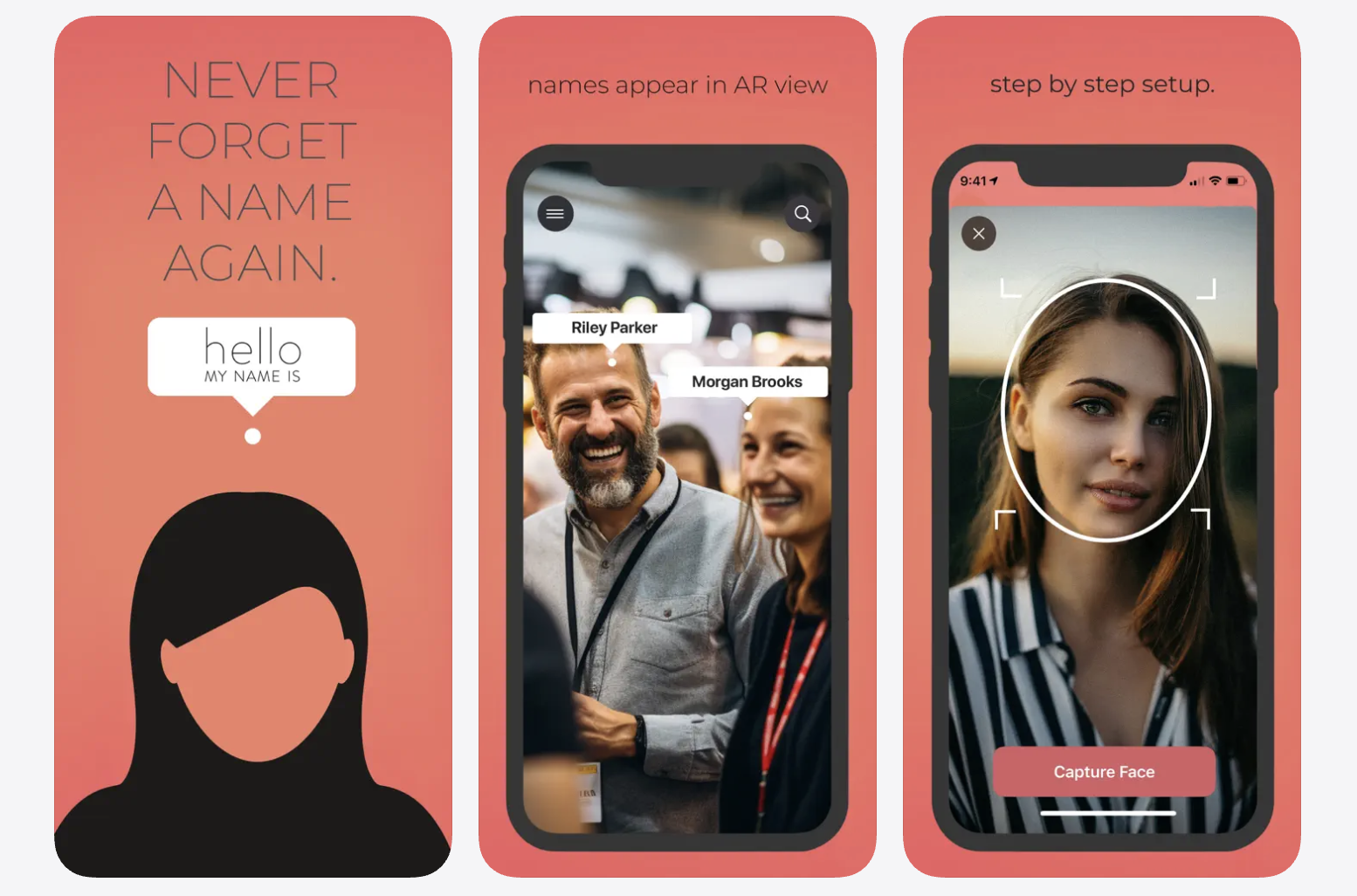
View from the App Store.